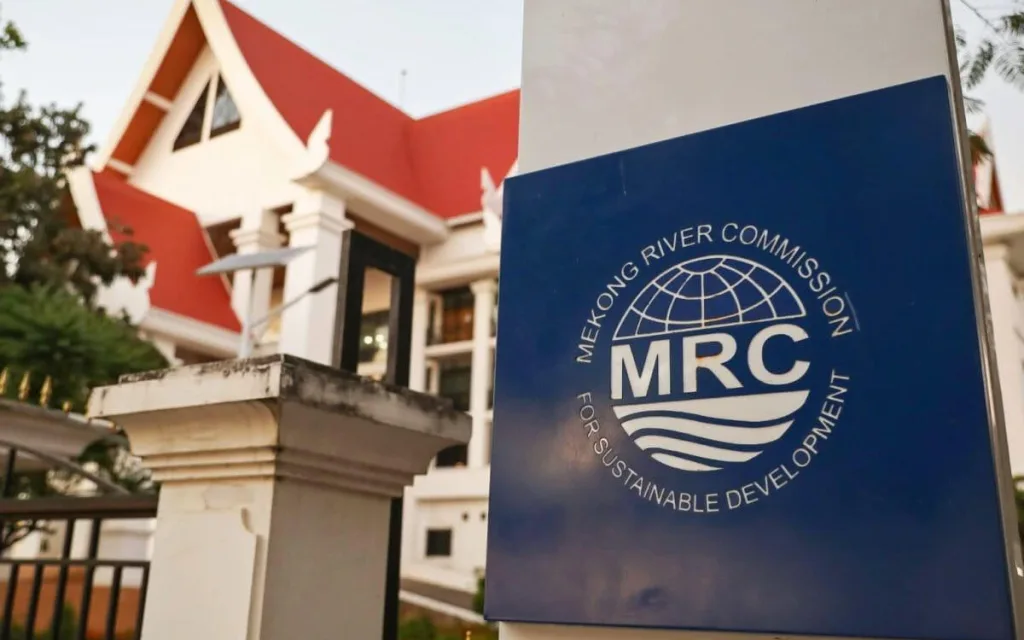
The Mekong River Commission, established by the 1995 Mekong Agreement, stands as the sole treaty-based organization dedicated to managing the transboundary Mekong basin. However, a profound structural fault line runs through its foundation. China, the upstream hegemon controlling the Lancang stretch of the river, opted out of full membership and participates only as a dialogue partner. Myanmar followed suit. As a result, the organization lacks jurisdiction over the most significant hydrological actor in the basin, rendering it structurally incapable of regulating the cumulative impacts of upstream hydropower development on downstream nations.
The Hydrological Imbalance
The hydrological implications of this fragmented governance are severe. China has constructed a cascade of large dams on the mainstream Lancang River and its tributaries. Hydrological modeling indicates that these upstream reservoirs possess the capacity to drastically alter the natural flow regime. Research demonstrates that dam construction in the Lancang basin has mitigated some flood risks but at the cost of fundamentally altering seasonal water distribution (Wang et al., 2017).
The upstream reservoirs hold a substantial portion of the annual discharge, which translates into an unprecedented technical ability to manipulate water volumes. Recent observational data confirms these alterations in real time. At the Chiang Saen station in northern Thailand, located downstream of the Chinese cascade, flow fluctuations have been profoundly impacted by upstream dam operations. This dynamic has resulted in a nearly 98 percent increase in dry season monthly discharge alongside significant wet season reductions (Morovati et al., 2024). Such flow modifications directly threaten the agricultural and fisheries productivity upon which millions of downstream residents depend.
Institutional Paralysis
Beyond the external limitation of China’s absence, the Mekong River Commission suffers from paralyzing internal constraints. The organization operates without binding regulatory authority. Member states have consistently refused to cede national sovereignty over water management and energy policies. Within the domestic political hierarchies of the member states, National Mekong Committees frequently lack the institutional leverage to challenge powerful energy and economic ministries pushing for rapid hydropower expansion.
The commitment to cooperative governance is often undermined by narrow national interests. Investigations into data sharing and regulatory compliance highlight that member states, including Thailand, frequently obstruct transparent information exchange due to national security concerns and a perceived lack of immediate national benefit (Plengsaeng et al., 2014). This environment creates a pattern where the commission achieves technical milestones but routinely fails to translate them into binding political agreements.
Ecological Ramifications
The convergence of uncoordinated upstream development and weak downstream governance has triggered severe ecological degradation across the basin. The rapid expansion of large-scale hydropower infrastructure disrupts critical fish migration routes and traps essential sediments. This sediment starvation threatens the structural integrity of the Mekong Delta in Vietnam, compounding the risks of agricultural decline and coastal erosion.
Regional governance mechanisms have systematically failed to prioritize ecological baselines. Strategic environmental assessments, including formal recommendations to defer mainstream dam construction to allow for comprehensive environmental study, have been bypassed in favor of immediate economic gains and infrastructure expansion (Grumbine et al., 2012).
Ultimately, the Mekong River Commission illustrates the limits of basin governance when critical actors remain outside the regulatory framework. Without the binding participation of China and a willingness among downstream states to prioritize collective ecological security over isolated national interests, the commission will remain a coordination forum. As a result, the social and ecological systems of the Mekong basin continue to bear the compounding costs of unchecked development.
Summary of Basin Governance Fault Lines
| Fault Line Category | Primary Driver | Basin Consequence |
|---|---|---|
| Hydrological | China's non-membership and autonomous control of the upstream Lancang dam cascade. | Drastic alteration of seasonal flow regimes, threatening downstream food and water security. |
| Institutional | Lack of binding regulatory authority and member states' refusal to cede sovereignty. | Failure to implement transboundary environmental impact assessments and water sharing rules. |
| Ecological | Prioritization of rapid hydropower expansion over established environmental baselines. | Disrupted fish migration, sediment starvation, and severe degradation of the Mekong Delta. |
References
- Grumbine, R. E., Dore, J., & Xu, J. (2012). Mekong hydropower: drivers of change and governance challenges. Frontiers in Ecology and the Environment, 10, 91-98. https://doi.org/10.1890/110146
- Morovati, K., Zhang, K., Shi, L., et al. (2024). On the cause of large daily river flow fluctuations in the Mekong River. Hydrology and Earth System Sciences, 28, 5133-5147. https://doi.org/10.5194/hess-28-5133-2024
- Plengsaeng, B., Wehn, U., & van der Zaag, P. (2014). Data-sharing bottlenecks in transboundary integrated water resources management: a case study of the Mekong River Commission’s procedures for data sharing in the Thai context. Water International, 39, 933-951. https://doi.org/10.1080/02508060.2015.981783
- Wang, W., Lu, H., Ruby Leung, L., et al. (2017). Dam Construction in Lancang-Mekong River Basin Could Mitigate Future Flood Risk From Warming-Induced Intensified Rainfall. Geophysical Research Letters, 44. https://doi.org/10.1002/2017gl075037